
Modular behind-the-meter storage. Sized to your site.
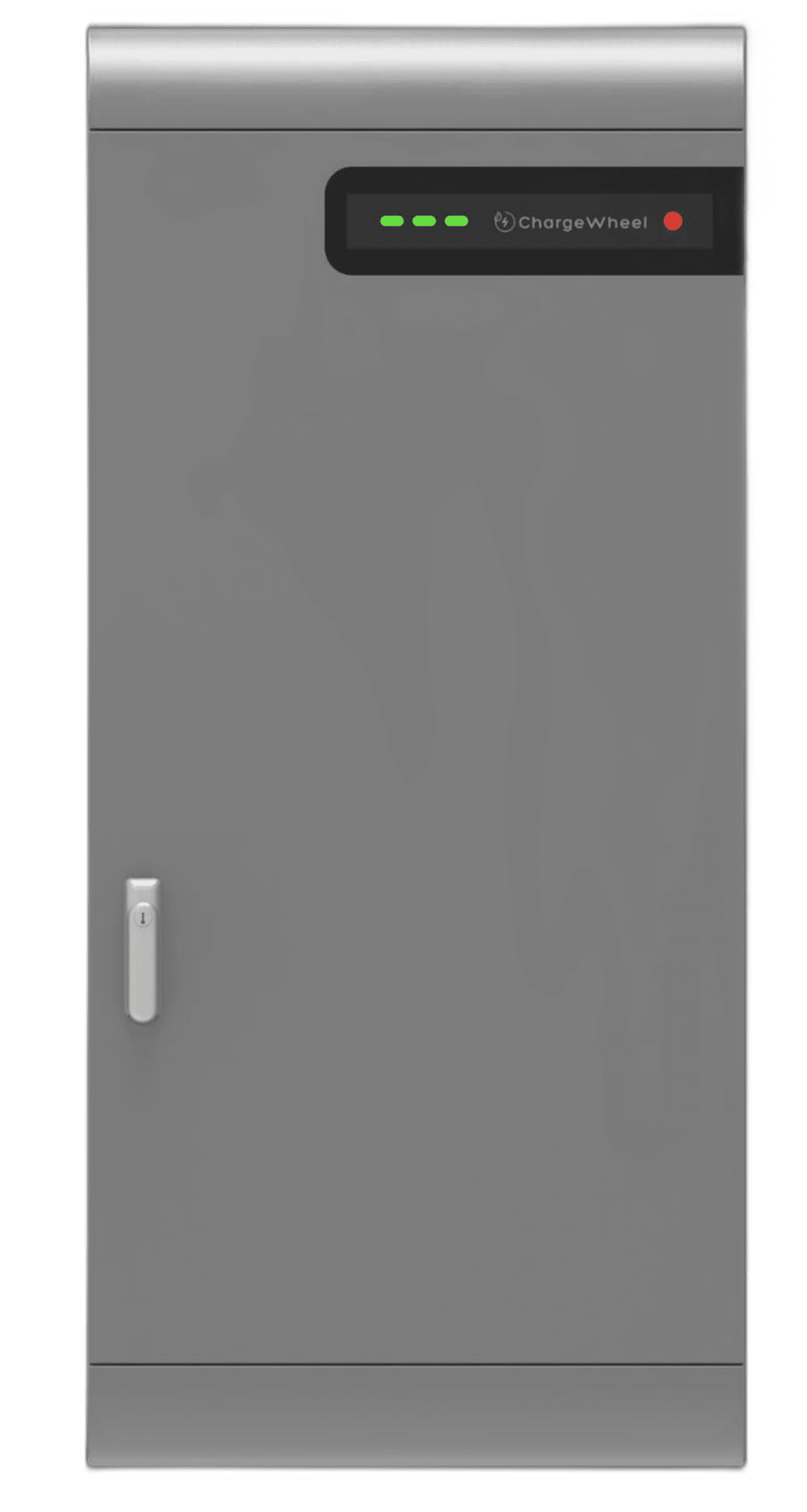
The hardware layer of UpGrid — LFP (lithium iron phosphate) cabinets with a supercapacitor buffer, liquid cooling, and IP54 outdoor enclosures. Stack from 180 kWh to multi-megawatt.
Four jobs, one platform.
The same cabinet handles demand-charge shaving, UPS-class ride-through, multi-hour backup, and capacity amplification — controlled in real time by UpGrid OS.
Peak shaving
Absorbs demand spikes behind the meter. Your utility bill drops; your peak charges drop further.
UPS ride-through
Supercapacitor bank handles sub-millisecond sags and transients. Sensitive loads never see a blink.
Multi-hour backup
LFP stack sustains critical load through extended grid outages — replacing diesel with zero emissions and zero fuel logistics.
Capacity amplification
Delivers 5–10× more power to your loads than your grid connection is rated for — without a utility upgrade.
Start with one cabinet. Scale to megawatts.
UpGrid BESS is built around a single physical unit — the cabinet — deployed as-is or stacked in parallel. Expand later by adding cabinets, not by rebuilding.
One UpGrid 180, 280, or 370. Fits small commercial sites: a bus depot, a mid-size plant, an edge compute room.
Four cabinets in parallel. The volume deployment — transit depots, data-center retrofits, 1–5 MW industrial sites.
Eight cabinets in parallel. Multi-megawatt deployments — new-build data centers, truck-stop corridors, large industrial campuses.
Larger deployments combine multiple racks. Every cabinet uses the same bus architecture — expand without replacing what's already installed.
LFP cells. Liquid cooling. Unit-level safety.
Every UpGrid cabinet uses the same internals whether you deploy one or eight — tuned for commercial and industrial thermal, cycling, and fire-safety envelopes.
LFP · 280 Ah cells
Lithium iron phosphate — thermally stable, cobalt-free, >6,000-cycle life at 80% depth-of-discharge. Industry standard for behind-the-meter stationary storage.
Liquid cooling · IP54
Module-level cold plates, glycol loop, redundant pumps. Holds cell delta-T under 3 °C across the rack — extends life and prevents thermal stratification.
UL 9540A unit-level
UL 9540A tested at the unit. No module-to-module thermal-runaway propagation per the 9540A summary report. NFPA 855 setbacks built into every spec sheet.
Full spec sheet.
Electrical, thermal, physical, and communications. The numbers your engineering, procurement, and fire-safety teams will ask for on day one.
- SKUsUpGrid 180, 280, 370
- 180 · 280 · 370
- Energy per cabinet
- 186 – 373 kWh
- Power per cabinet
- 180 – 370 kW
- C-rate (continuous)
- 1 C
- Round-trip efficiency
- ≥ 92%
- Cycle lifeAt 80% depth-of-discharge
- ≥ 6,000
- DC bus voltage
- 800 V DC
- AC connection
- 480 / 415 / 380 V
- PCS efficiency
- ≥ 97%
- Response time (UPS)Supercap-backed
- < 1 ms
- Switchover (backup)Battery already on bus
- 0 ms
- AmplificationBehind-the-meter capacity
- 5–10×
- Enclosure
- IP54 outdoor
- Cooling
- Liquid (glycol)
- Operating temp
- −20 to +50 °C
- Footprint (180 kWh)
- 1.2 × 1.5 m
- Footprint (370 kWh)
- 2.0 × 2.0 m
- Comms
- Modbus TCP · REST · OCPP
Full datasheet available under NDA. Modular installation: rack 2, 4, or 8 cabinets to size the system to site load.
Pre-cleared for US + Canada commercial deployment.
The regulatory work is done. UL 1973 for the battery, UL 9540A for fire safety, NFPA 855 setback documentation, and CSA for Canadian AHJ approval. Your plan reviewer won't blink.
Battery safety
UpGrid cabinets certified to ANSI/CAN/UL 1973:2022 by TÜV Rheinland.
Fire propagation
Unit-level thermal-runaway test. No module-to-module propagation per the 9540A summary report.
Stationary BESS code
Setback distances and suppression specs ship with every system.
Canadian deployment
CSA C22.2 #346 listed for Canadian commercial and industrial installation.
Purchase order to commissioned in 90 days.
Every UpGrid site follows the same schedule. No utility queue, no transformer wait — your existing AC service stays in place while we commission behind the meter.
- Week 0–2
Site survey + design
Our engineers profile your load curve, tariff, and electrical room. Output: system spec, single-line diagram, signed quote.
- Week 2–8
Manufacturing
Cabinets built on our UL 1973 + 9540A validated line. AHJ permit submittal happens in parallel. Freight by sea or air.
- Week 8–11
Install + commission
Concrete pad, conduit, AC tie-in by your local subcontractor. ChargeWheel field engineers commission UpGrid OS and integrate with your EMS, DCIM, or fleet management system.
- Week 12+
Live + monitored
First peak shave on day one. SaaS dashboard active, remote monitoring 24/7, on-site service network for warranty events.
Spec out your UpGrid deployment.
Share your load profile, tariff, and target deployment window. You'll get a cabinet count, single-line diagram, and unit economics within a week.